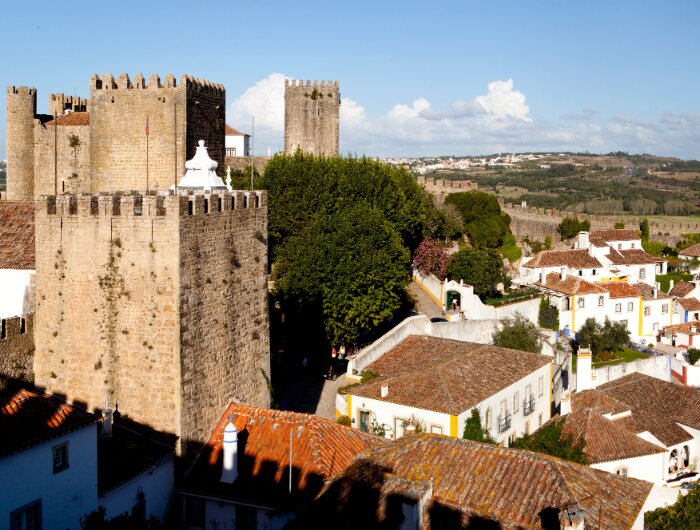
Every country harbors its legends, and Portugal is no exception, with the story of Pedro and Inês. Their tale of forbidden love, political scheming, heartbreak, and lasting devotion has inspired poets, writers, artists, and travelers through the ages. More than just a historical event, it has become a core part of Portugal’s identity and stands as one of the most touching love stories ever told. Today, visitors can walk the paths of these lovers, exploring the castles, gardens, monasteries, and landscapes where their extraordinary story took place.
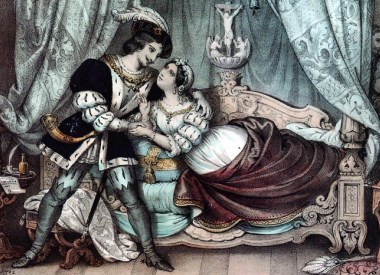
Let’s revisit the 14th century. Dom Pedro, son of King D. Afonso IV and heir to the throne, marries Dona Constança of Castilian nobility. She arrives in Portugal for the wedding with her ladies-in-waiting, including her close friend, Galician Dona Inês de Castro.
Who were Pedro and Inês?
The story begins in the 14th century. Prince Pedro, heir to the Portuguese throne, was married to Constança Manuel, a noblewoman from Castile. Among Constança’s ladies-in-waiting was a young Galician noblewoman named Inês de Castro.
Their meeting would have a lasting impact on Portuguese history. Despite Pedro’s marriage, he and Inês fell passionately in love. What started as a forbidden romance soon developed into a lasting relationship that defied royal norms and caused concern at the Portuguese court. After Constança’s death, Pedro openly maintained his relationship with Inês, and many historians think they may have married secretly. However, their happiness was short-lived.
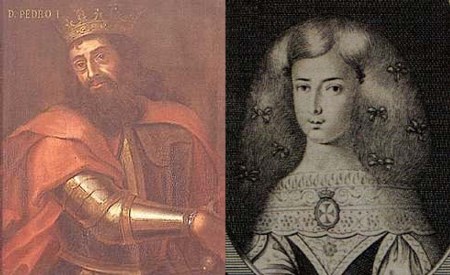
Dom Pedro I and Dona Inês de Castro
Why was Inês de Castro killed?
As Pedro’s love for Inês deepened, worries among Portugal’s political leaders also increased. King Afonso IV was apprehensive about the sway of Inês’s influential family and feared her children could pose a threat to the Portuguese succession.
Under increasing pressure, the King made a decisive choice. In 1355, Inês de Castro was put to death close to Coimbra. The event deeply affected Pedro. Tradition holds that Inês pleaded for mercy before her execution, but her requests were disregarded. Her killing remains one of the most emotional and debated moments in Portuguese history.
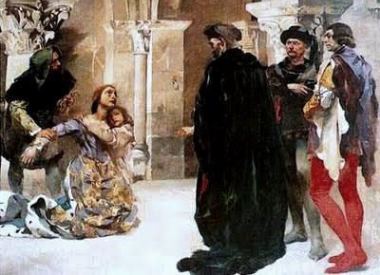
Representation of Dona Inês de Castro’s death
The fountain of tears in Coimbra remains accessible today. Located at the stunning Quinta das Lágrimas, it features the renowned Fountain of Tears. Legend suggests that the reddish stains on the stone are remnants of Inês’s blood, permanently marking where she died. Whether based on fact or folklore, the gardens’ ambiance and the enduring legend render this site one of Portugal’s most romantic and emotional landmarks.
Discover Coimbra and its fascinating stories with a private guided experience!
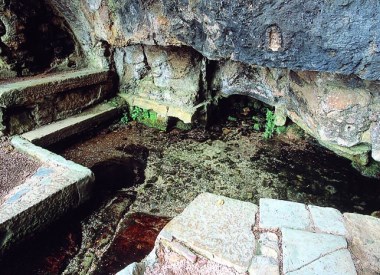
Lágrimas (tears) Fountain in Quinta das Lágrimas, Coimbra
The king’s revenge
When Pedro eventually ascended to the Portuguese throne, his sorrow turned into a desire for revenge. The individuals responsible for Inês’s death were captured and executed during one of Portugal’s most memorable and dramatic moments. Yet, Pedro’s love for Inês extended even beyond her death. Legend has it that he declared her his rightful queen posthumously and ordered her body to be crowned. Nobles supposedly had to acknowledge her as queen and show their respect. Whether entirely accurate or partly mythologized over time, this story highlights the profound extent of Pedro’s love and its significant influence on Portuguese cultural memory.

Representation of Dona Inês de Castro’s coronation
Why are the tombs of Pedro and Inês so special?
The last chapter of their story is at the stunning Monastery of Alcobaça, a UNESCO World Heritage Site in Portugal. It features the remarkable tombs of Pedro and Inês, celebrated as some of Europe’s finest Gothic funerary art, showcasing exceptional craftsmanship and symbolism. Notably, their tombs face one another. According to be deliberate: on the Day of Judgment, when they are resurrected, they will see each other first. Few monuments narrate a love story as beautifully.
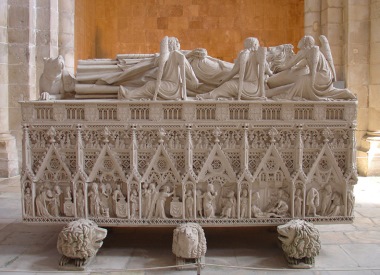
Tomb of Dom Pedro I, Alcobaça Monastery
Where can you follow the Pedro and Inês route?
Travelers interested in Portugal’s most romantic legend can explore several locations linked to the story:
Coimbra
- Quinta das Lágrimas
- Fountain of Tears
- Historic city center
- University of Coimbra
Alcobaça
- Monastery of Alcobaça
- Tomb of Pedro I
- Tomb of Inês de Castro
Collectively, these destinations provide an intriguing voyage through one of Europe’s most enduring love stories.
Explore Coimbra, Alcobaça, and Portugal’s historic heartland!
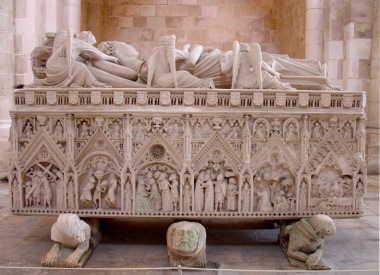
Tomb of Dona Inês de Castro, Alcobaça Monastery
Discover Portugal’s most romantic story with Portugal Premium Tours
The story of Pedro and Inês is more than a historical tale. Explore Portugal’s rich history through its castles, monasteries, legends, and traditions. Discover the human stories behind some of its most iconic monuments. Portugal Premium Tours offers personalized tours that highlight Coimbra, Alcobaça, and other cultural gems, tailored to your interests. As your dedicated travel planner, we ensure you experience Portugal your way, uncovering the stories and legends that make the country unforgettable.