While the Algarve is often associated with beautiful beaches, its character changes considerably from east to west. The calm lagoons and historic towns of the Eastern Algarve give way to dramatic limestone formations, hidden coves, and, eventually, the windswept cliffs of Sagres. This scenic Algarve itinerary follows that transformation, beginning in Tavira and ending at Cabo de São Vicente. It can be experienced over several days or adapted into a series of private day tours with Portugal Premium Tours.
Where should the most scenic Algarve trip begin?
Begin in Tavira! The town sits along the Gilão River, connected by bridges and lined with traditional façades, tiled houses, and café terraces. Its cobbled streets lead towards small churches, shaded squares, and the remains of a medieval castle overlooking the terracotta rooftops. Tavira invites visitors to take time to walk along the river, enter a local market, or stop for coffee in one of the town’s peaceful squares.
A short journey from the center leads towards the beaches and waterways of the Ria Formosa Natural Park. Here, barrier islands, salt marshes, and tidal channels create one of the most distinctive landscapes in southern Portugal. Depending on the season and your interests, the day may include a boat trip through the lagoon, a visit to Tavira Island, or a stop in the surrounding salt-producing areas.
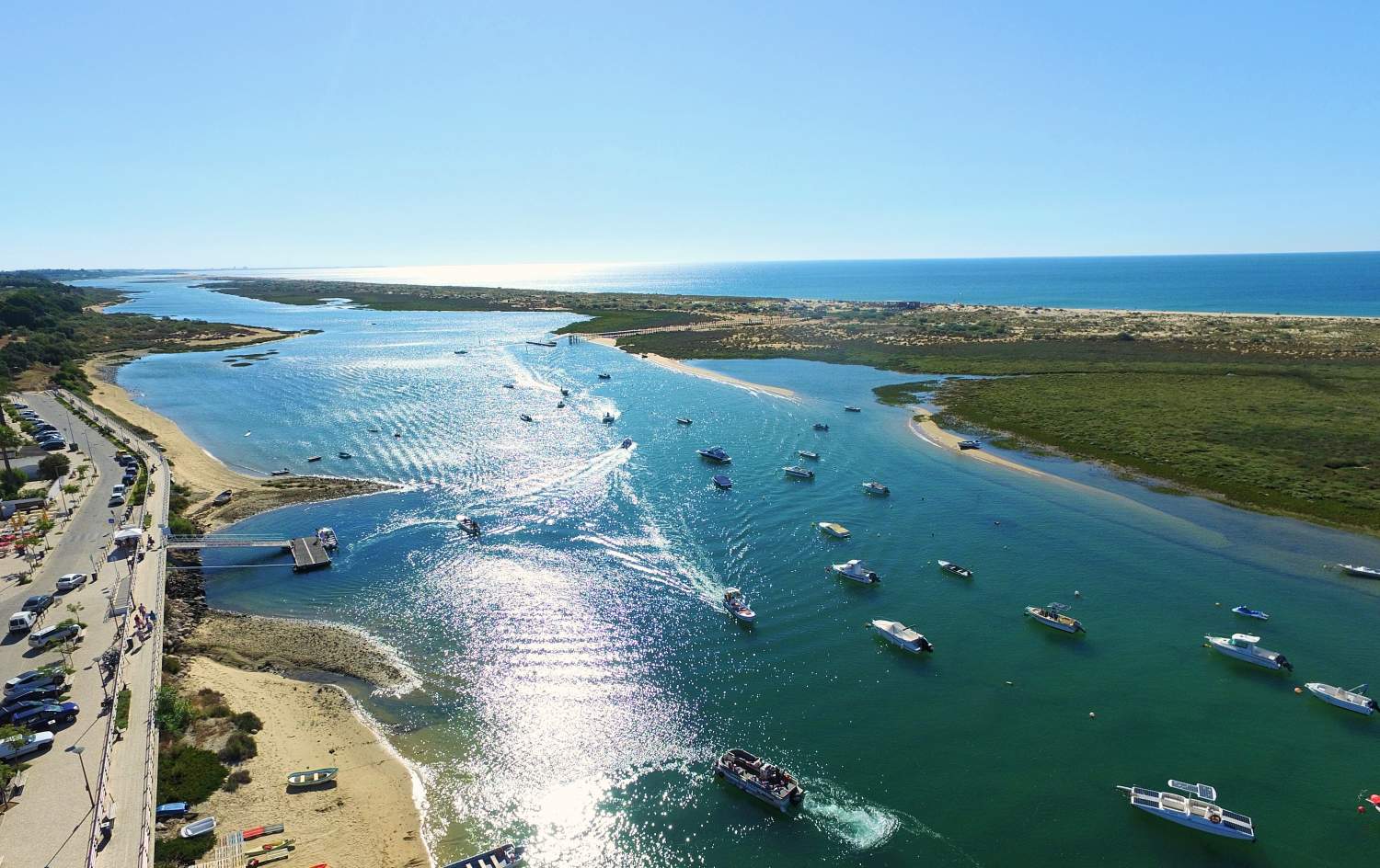
Ria Formosa Natural Park
Why should you stop in Olhão?
Continue west towards Olhão, a working fishing town with a character that feels markedly different from the Algarve’s resort areas. Its historic quarter is a maze of narrow streets, flat-roofed white houses, and small stairways inspired by North African architecture. Near the waterfront, the town’s red-brick market buildings remain at the center of daily life. In the morning, the market fills with freshly caught fish, regional produce, herbs, fruit, and conversations between local vendors. It is one of the best places to experience the Algarve beyond its beaches.
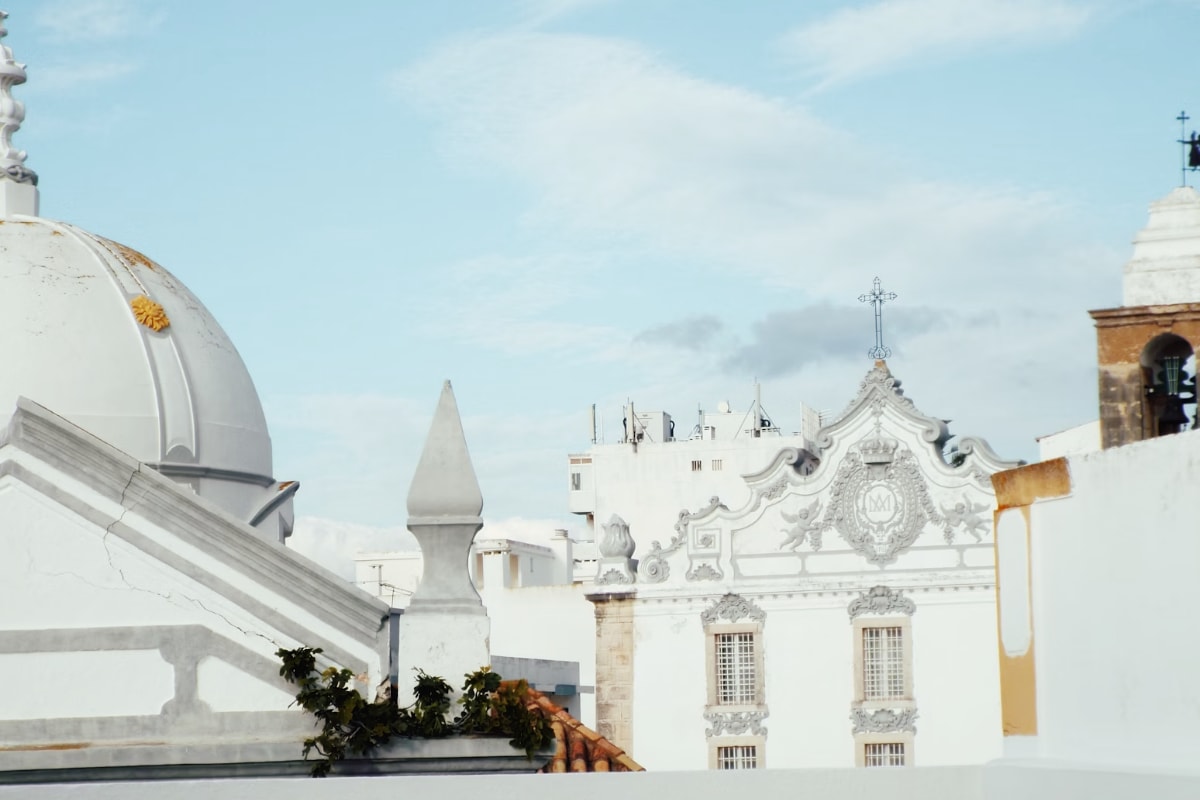
Village of Olhão
From Olhão, traditional boats cross the Ria Formosa towards islands such as Culatra, Armona, and Farol. A private boat experience can add another dimension to the trip, offering a closer look at the lagoon’s fishing communities, wildlife, and quiet beaches.
Is Faro worth visiting during an Algarve trip?
Faro is frequently treated only as an arrival point, but the Algarve’s capital deserves more time than many travelers give it. Enter the historic center through the Arco da Vila and walk into the Cidade Velha, where cobbled lanes lead towards Faro Cathedral and the former episcopal palace. Enclosed by centuries-old walls, this district feels removed from the modern city beyond it. From the cathedral tower, rooftops, church domes, and the channels of the Ria Formosa extend towards the horizon.
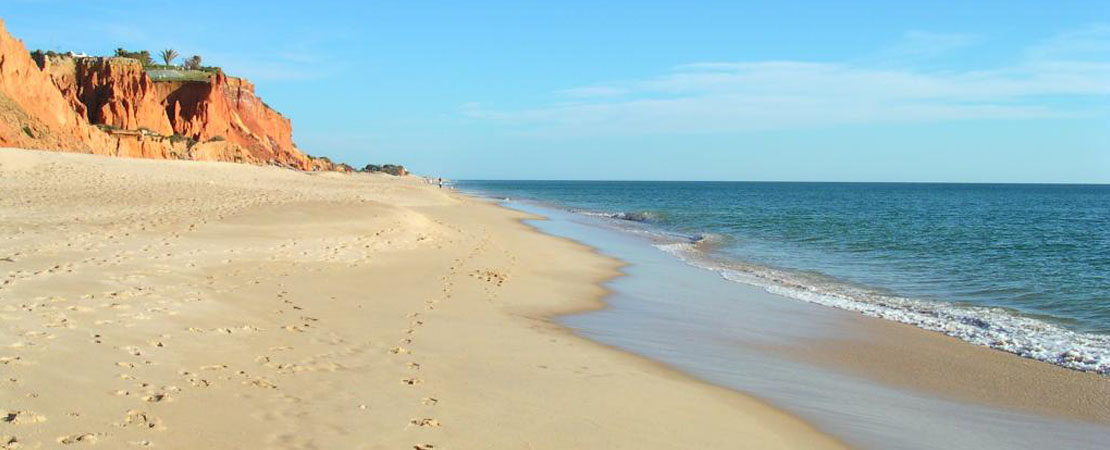
Sand beach in Faro
Faro offers a valuable cultural pause between the quieter Eastern Algarve and the busier central coast. It introduces another side of the region, one shaped not only by beaches, but by Roman foundations, medieval defenses, religious heritage, and maritime trade.
Which coast offers the best views in the Central Algarve?
Leaving Faro, the journey turns towards the central coastline. This part of the Algarve is known for long sandy beaches, cliffs, and some of the region’s most recognizable ocean views. Yet the experience changes considerably depending on where and when you stop. Near Vilamoura, the landscape becomes polished and cosmopolitan, with its marina, waterfront restaurants, and relaxed resort atmosphere. Further west, the coastline around Albufeira introduces high cliffs, sheltered beaches, and sweeping Atlantic viewpoints.
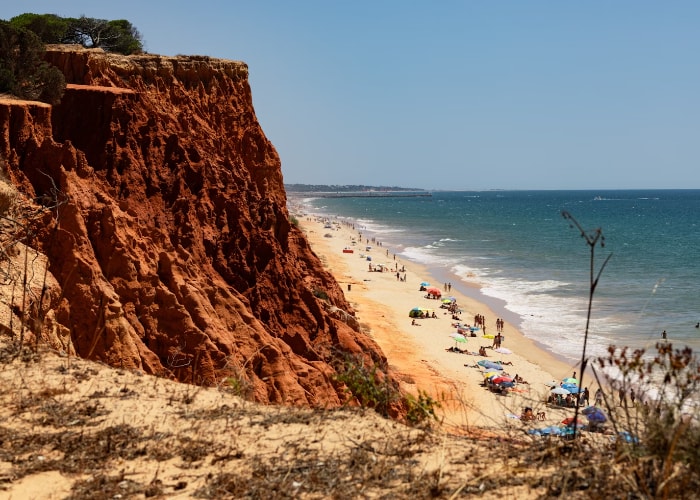
One of the most memorable stops is Praia da Falésia, where a long stretch of sand is framed by layered red and white cliffs. Seen from above, the contrast between the rock, pine trees, and deep-blue water creates one of the Algarve’s most striking panoramas.
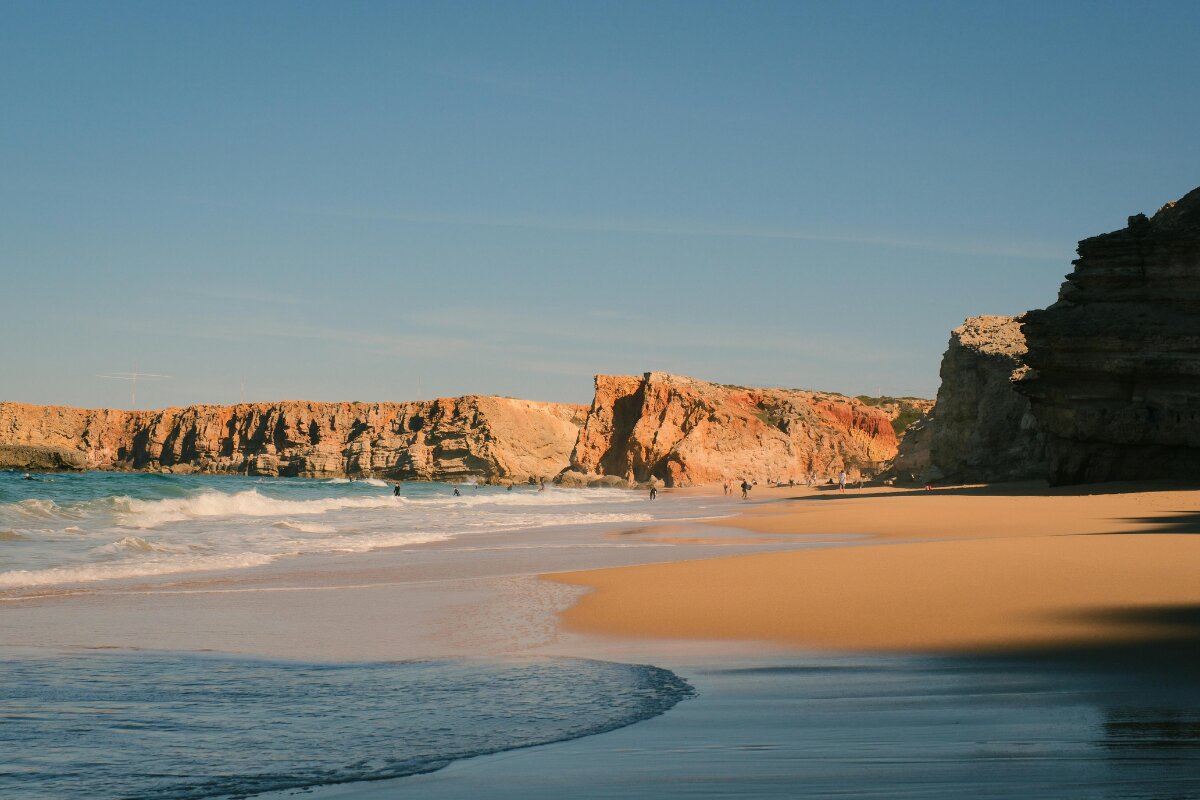
Discovering the natural beauty of the Algarve’s beaches and coastal landscapes
Where can you see the Algarve’s most famous golden cliffs?
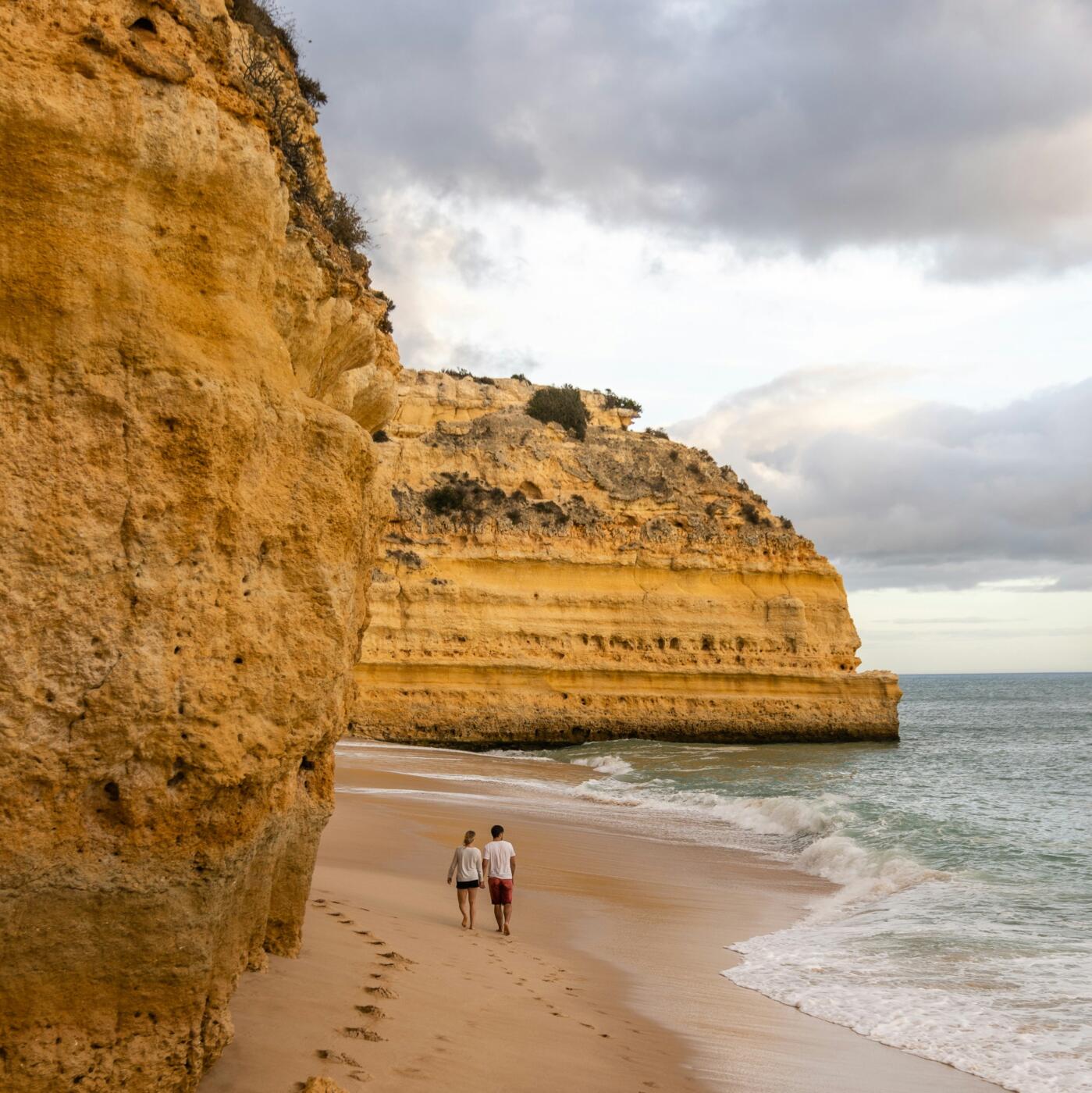
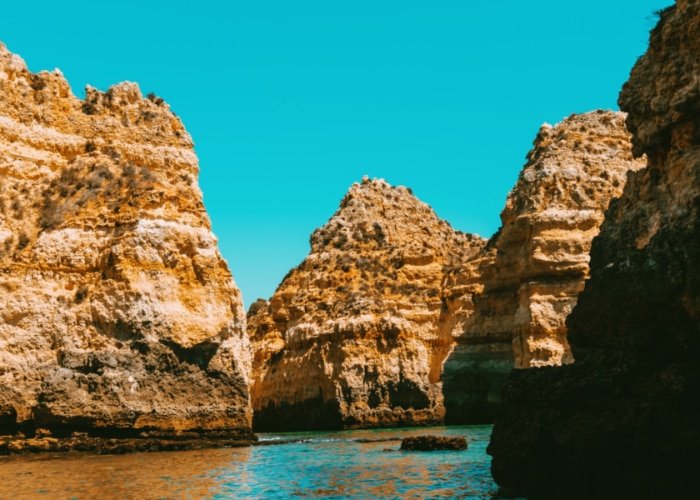
As the trip continues west, the landscape becomes increasingly dramatic. Around Carvoeiro, Lagoa and Praia da Marinha, the Algarve’s limestone cliffs have been shaped into arches, caves, pillars and isolated coves. These formations are among the most photographed landscapes in Portugal, but they are even more impressive when experienced from different perspectives.
Walk along a cliff-top trail for expansive ocean views, descend towards a sheltered beach, or explore the coast by boat when sea conditions allow. The area around Benagil is particularly well known for its sea cave and circular opening in the ceiling. However, this part of the Algarve contains smaller coves, coastal paths, and viewpoints that reveal a landscape that changes with the light throughout the day.
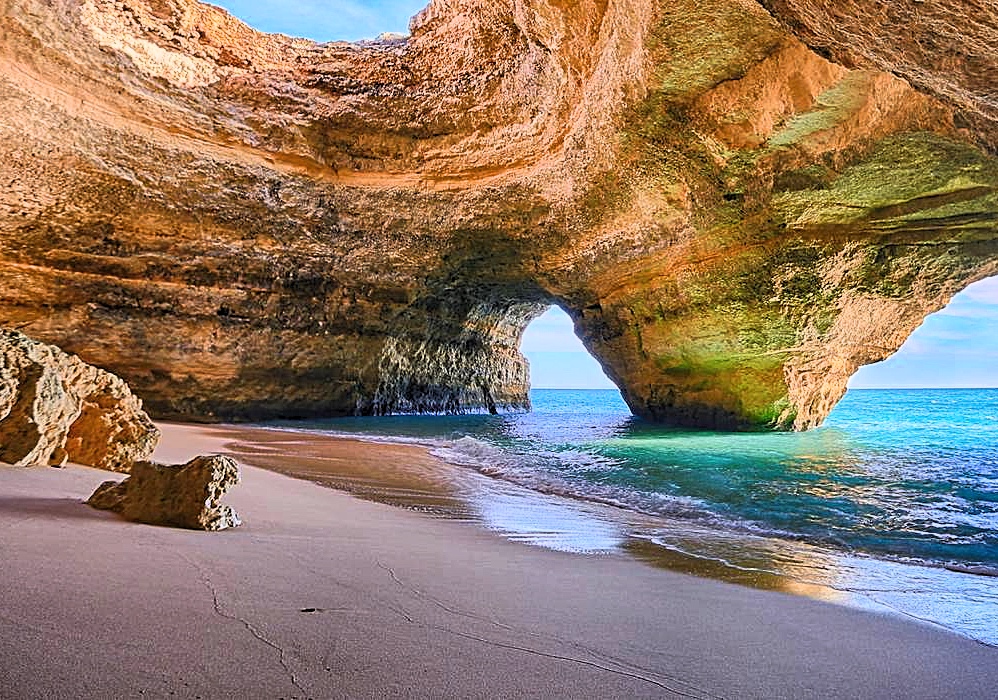
The breathtaking side of Benagil
Why should you include Portimão and Alvor?
Continue towards Portimão, a city with strong connections to fishing, maritime trade, and the Algarve’s canning industry. At Praia da Rocha, the coastline opens into a broad sweep of sand bordered by imposing cliffs. The viewpoint above the beach offers a dramatic introduction, but the old town and riverfront also deserve attention.
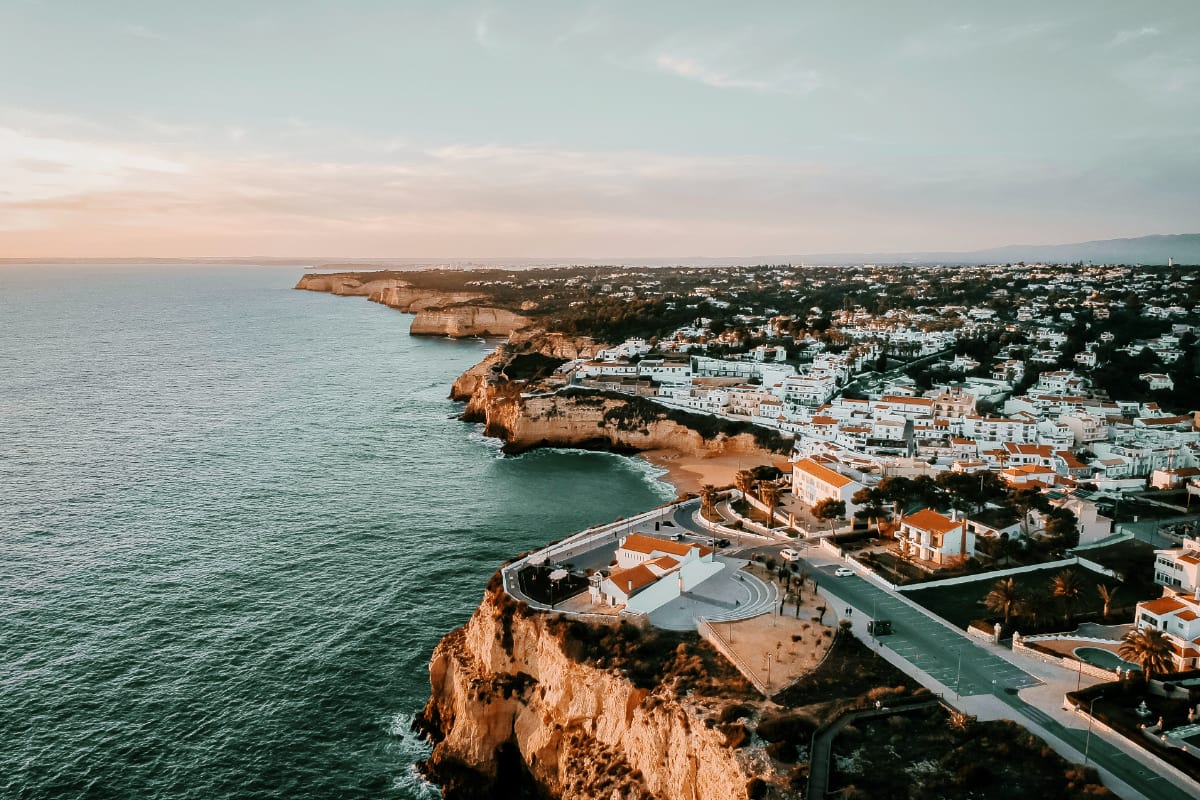
View of the beautiful side of Portimão
Nearby, Alvor offers a slower contrast. This former fishing village has retained much of its traditional atmosphere, with white houses, narrow streets, and seafood restaurants leading towards the lagoon. A wooden boardwalk crosses the wetlands around the Alvor estuary, creating an easy and scenic walk through dunes, salt marshes, and coastal habitats. In the late afternoon, the area becomes especially peaceful as the changing light reflects across the water.
What makes Lagos one of the best stops in the Algarve?
Few places capture the visual drama and layered history of the Algarve as completely as Lagos. The town played an important role during Portugal’s maritime expansion, and its historic center still contains sections of old walls, churches, tiled façades, and lively public squares. Yet it is the coastline just outside the center that makes Lagos one of the essential stops on any Algarve trip.
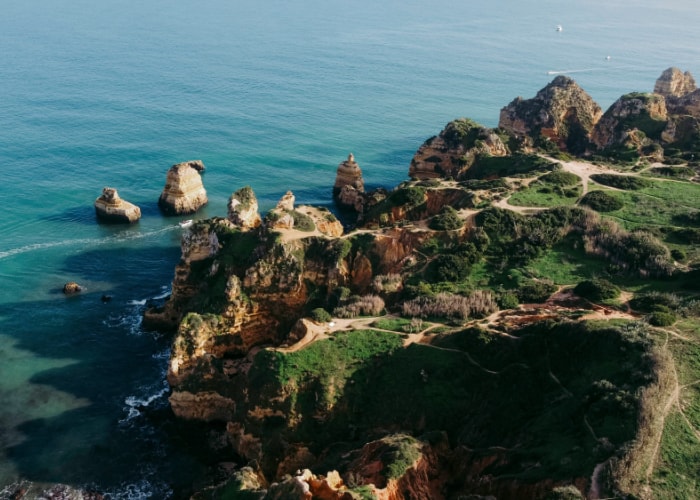
At Ponta da Piedade, golden limestone cliffs descend into clear Atlantic water, forming natural arches, caves, and narrow passages. From the cliff-top paths, the coastline unfolds in a series of panoramic viewpoints. From the water, small boats navigate between rock formations, revealing hidden angles that cannot be seen from above.
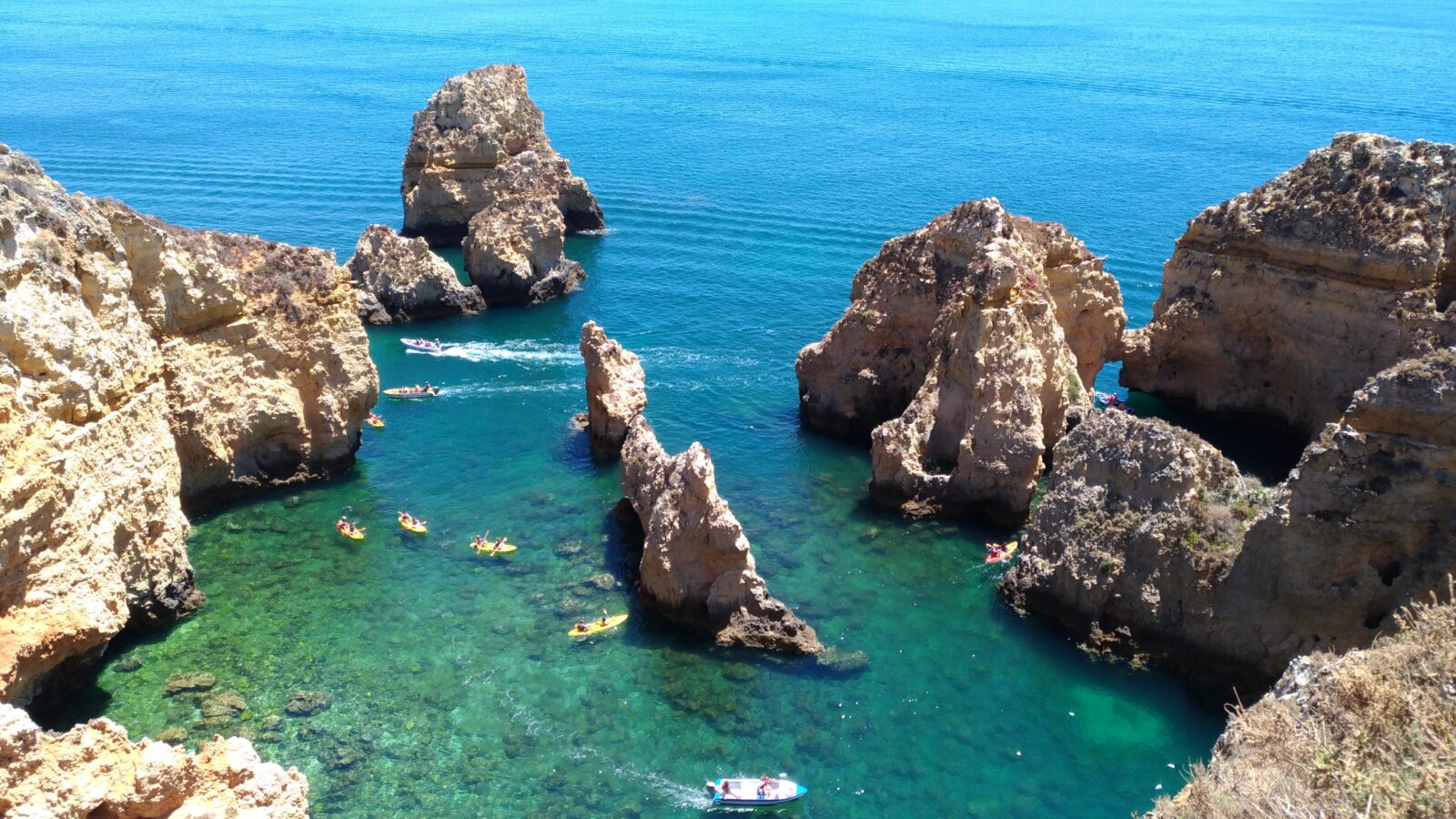
Lagos view Ponta da Piedade
A boat trip through the caves of Ponta da Piedade can be incorporated into a private West Algarve tour, depending on sea and weather conditions. Afterwards, return to Lagos for a walk through the old town or lunch at a restaurant serving regional seafood.
Should you drive from Lagos to Sagres?
The journey from Lagos to Sagres marks one of the most powerful changes in the entire route. The landscape opens up as buildings become less frequent, the vegetation grows lower, and the Atlantic feels increasingly present. Sagres has long been associated with navigation, maritime exploration, and Prince Henry the Navigator. At the Fortress of Sagres, visitors walk across a vast headland surrounded by ocean on three sides.
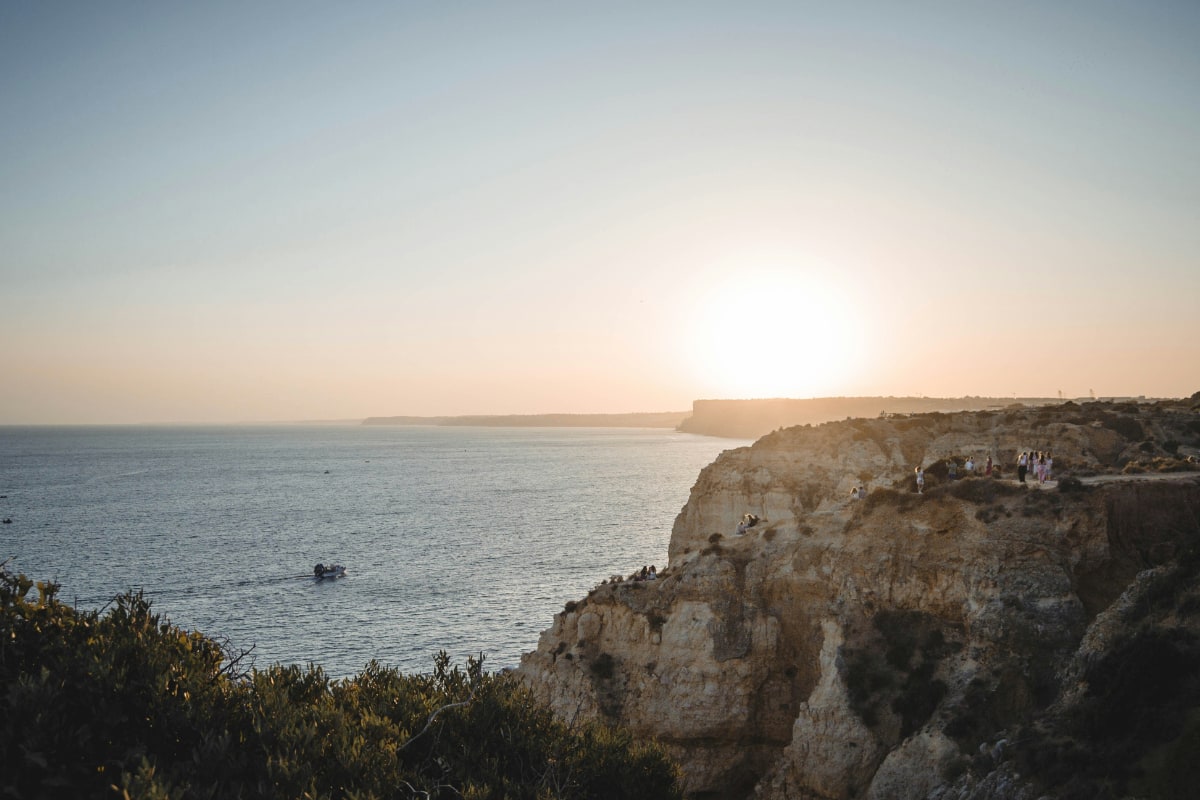
Sagres
The site is impressive not because of elaborate architecture, but because of its scale and setting. Wind moves across the cliffs, waves break far below, and the horizon seems almost limitless.
Where is the best place to end an Algarve trip?
End the journey at Cabo de São Vicente, the southwestern edge of mainland Europe. The final drive from Sagres crosses a sparse, almost cinematic landscape. The road stretches through low vegetation towards a lighthouse standing above the Atlantic. For centuries, this coastline was considered the end of the known world. Even today, it retains a sense of distance and rawness that feels very different from the beaches further east.
Arrive before sunset and walk towards one of the viewpoints along the cliffs. As daylight begins to fade, the Atlantic changes from blue to silver and then to deep shades of orange and gold. There are a few elaborate distractions here. The experience is defined by wind, ocean, rock, and light.
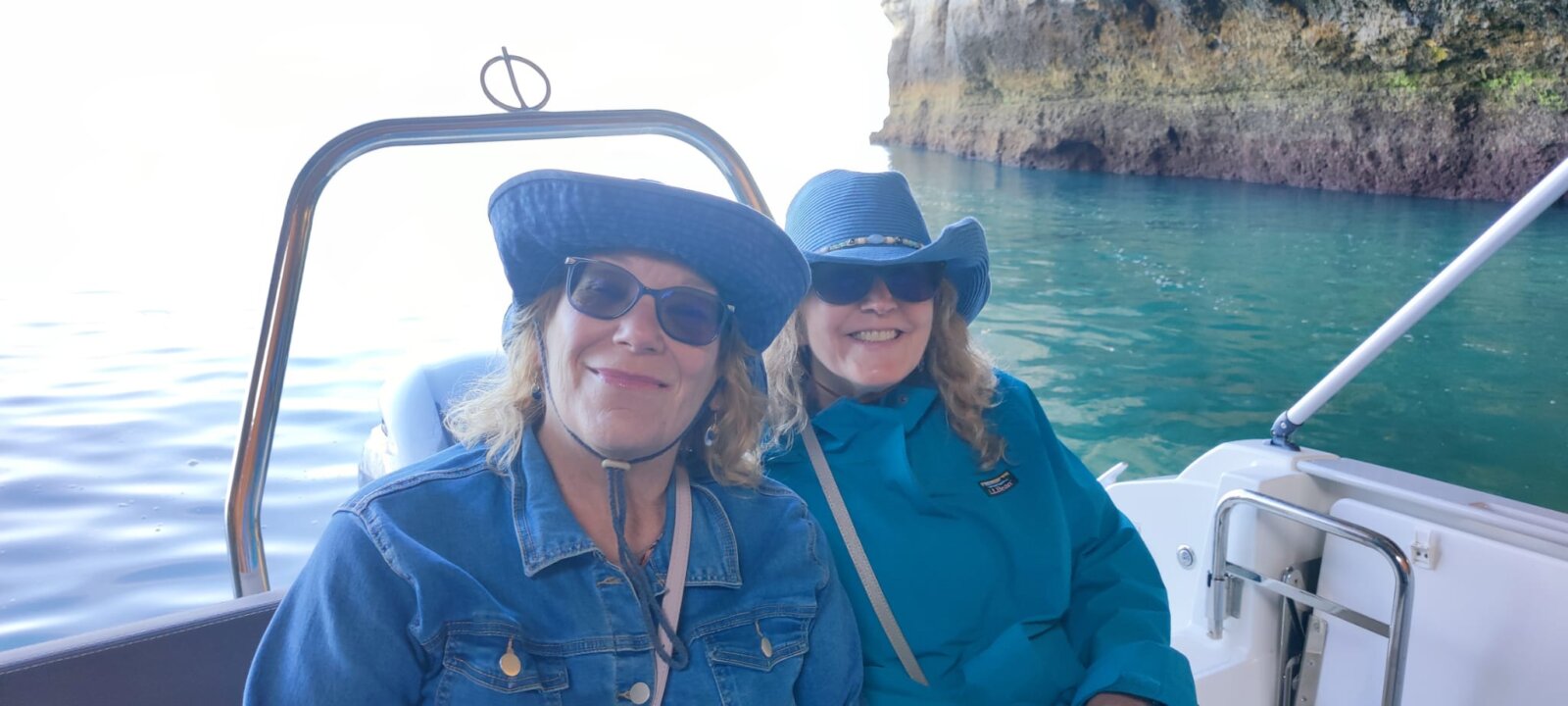
Portugal is always better from the water.
How many days do you need for an Algarve trip?
To experience this route comfortably, allow between four and seven days. A four-day itinerary can cover the principal highlights, while six or seven days provide more time for boat trips, coastal walks, long lunches, and spontaneous stops.
A possible itinerary could include:
- Day 1: Tavira, the Ria Formosa, and Olhão
- Day 2: Faro, Vilamoura and Praia da Falésia
- Day 3: Albufeira, Carvoeiro, Benagil and Praia da Marinha
- Day 4: Portimão, Alvor and Lagos
- Day 5: Ponta da Piedade, Sagres and Cabo de São Vicente
Additional days could be used to explore inland villages, enjoy private boat experiences, visit local producers, or extend the route north along the Vicentine Coast.
Can this Algarve trip be customized?
No two travelers imagine the Algarve in the same way. Some want to photograph the coast at sunrise. Others prefer long seafood lunches, quiet villages, historical sites, or time on the water. Families may need a gentler pace, while couples may wish to include private experiences and sunset viewpoints. This is where traveling with Portugal Premium Tours creates a meaningful difference. Our tours are private and can be adapted to your interests, preferred pace, and available time. Your guide-driver takes care of the timing and logistics, leaving you free to enjoy the landscapes and experiences along the way.
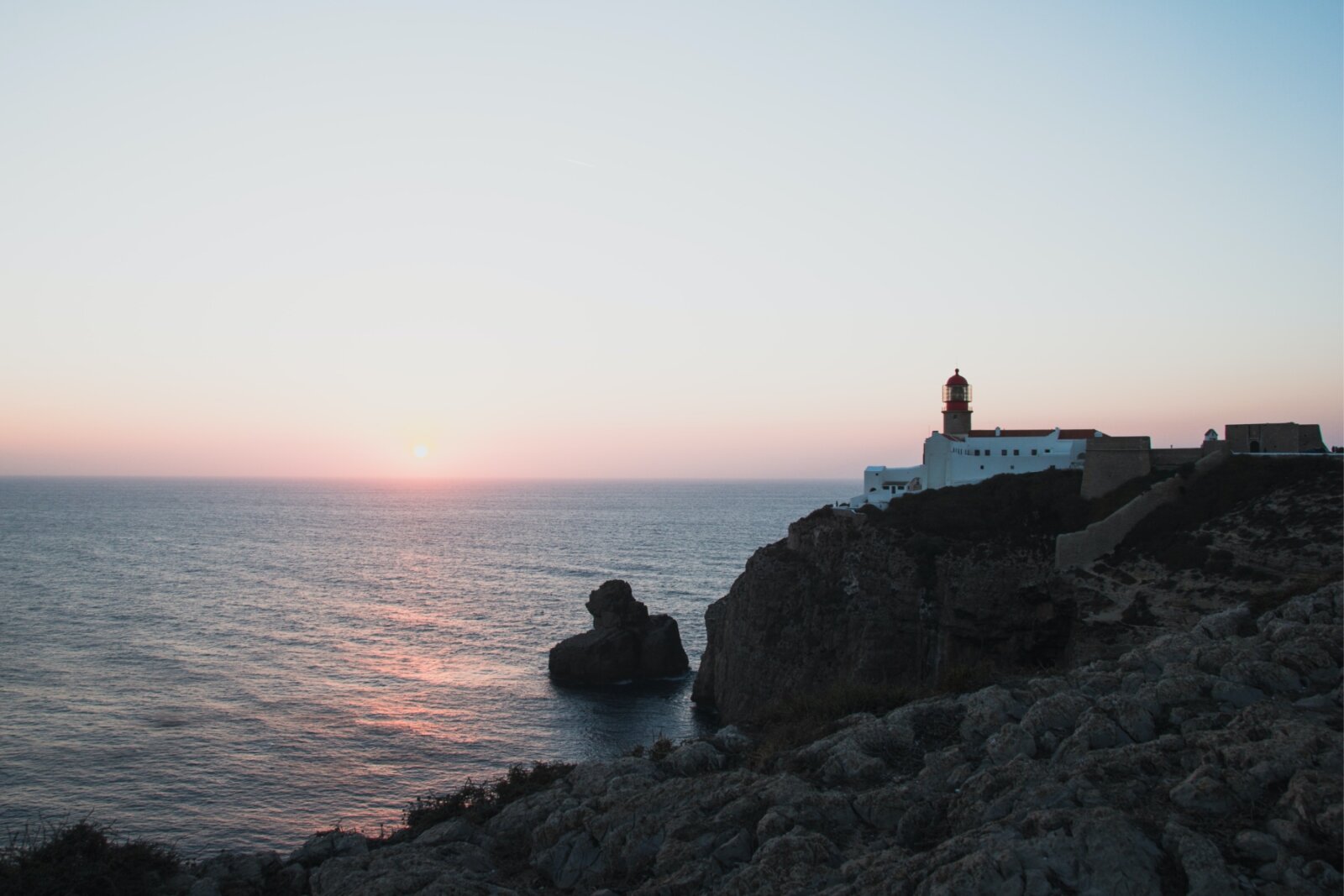
As the sun dips below the horizon, the Sagres Lighthouse stands watch over one of Portugal’s most breathtaking coastal landscapes.
Why explore the Algarve with Portugal Premium Tours?
Driving independently offers freedom, but a private journey adds context, comfort, and local knowledge. With Portugal Premium Tours, you travel in a comfortable private vehicle accompanied by an experienced guide-driver. Beyond taking you from one destination to another, your guide can help interpret the region, its history, food, landscapes, and traditions. The route can also be adjusted during the journey when circumstances allow. A local market may be particularly lively that morning. The sea may be perfect for a boat trip. A quieter restaurant may provide a better lunch experience than the original plan.
These small decisions often become the most memorable parts of the day. From Tavira’s riverfront streets to the cliffs of Cabo de São Vicente. The Algarve is a collection of different worlds connected by the trip. And the best way to discover them is not by rushing from one famous attraction to the next, but by allowing the journey itself to become part of the experience.